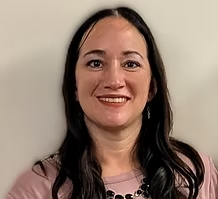
About the Tutor
I have been passionate about both music and reading since childhood. I studied music therapy in my bachelors program, hoping to use music to help people somehow, and I got into special education while trying to start a music program in a school.
During my years in the special education classroom, I became fascinated by the many different tools we have to help our children learn to read. I saw some students progress and was greatly encouraged by this. However, I found myself having a regular season of panic every March or so, when I looked at my data and saw that some students were still not at grade level in reading.
I took the two-year LETRS (Language Essentials for Teachers of Reading and Spelling) course and became a little obsessed with all there was to know about teaching reading. I tried so hard to implement what I was learning in my high school ELA curriculum, but I felt so limited by so many different things. Not enough time with my students. Not enough time to cover everything essential. Not enough time to prepare for testing. And not enough extra time to meet one-on-one with the students who still could not decode words.
I was expected to test all my 9th graders on grade-level texts, even though some were reading at a first or second grade level. There was always the pressure of credits, graduation, and passing classes on time.
I left the classroom to be home with my children, and came to realize that I could be more effective in private tutoring. I’m continuing my training in the Barton system, and I also use Foundation in Sounds and my music background to help students with auditory memory and phonemic awareness.
Our schools and teachers have come a long way in recent years. Science of reading laws are bringing wonderful tools into classrooms. Reading specialists are doing incredible work. However, some schools are still not set up to fully support an estimated 10–20% of students—those with dyslexia.
Some students will not learn to read without explicit teaching, at their own pace, free from school constraints. To these students… you are my people! Contact me and let’s talk about how we can work together.